
How to Start an Online Business in 2026: A Complete Guide for Beginners
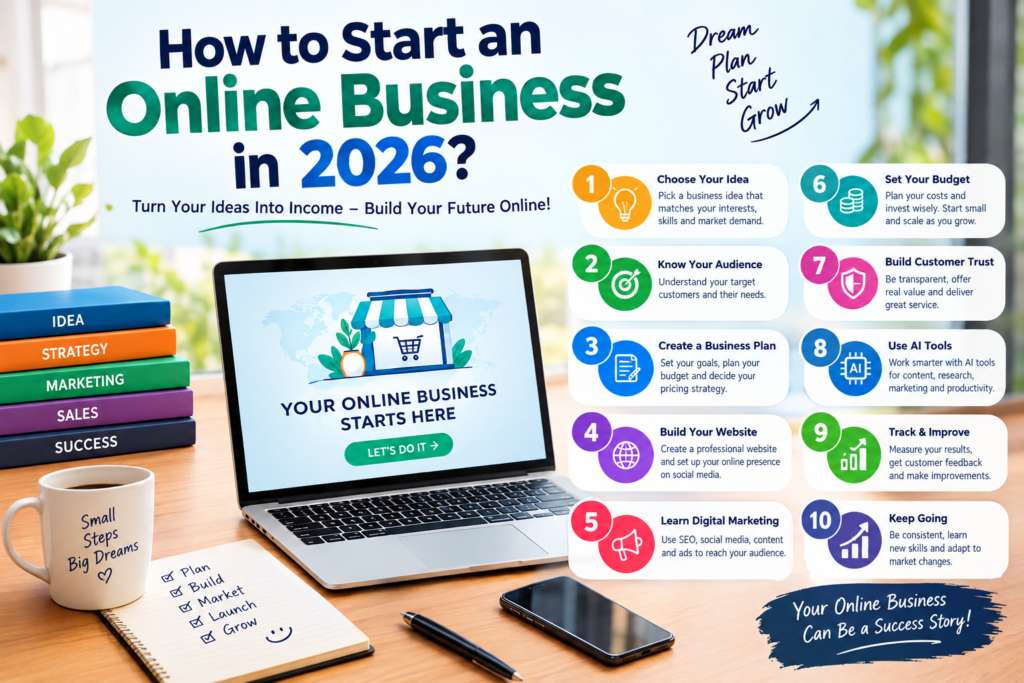
Starting an online business in 2026 is a great opportunity for people who want to become entrepreneurs. The internet allows you to sell products, offer services, and reach customers without opening a physical shop. Whether you are a student, freelancer, beginner, or small business owner, you can start an online business with the right planning and skills.
However, building a successful online business requires more than just creating a website. You need a good business idea, an understanding of your customers, effective marketing, and consistent effort. In this article, we will explain how to start an online business in 2026 step by step.
1. Choose the Right Online Business Idea
The first step is to choose a business idea that matches your interests, skills, and budget. You do not need a completely new idea to become successful. You can solve an existing problem in a better way or provide a useful service to a specific audience.
Here are some online business ideas you can consider in 2026:
- Digital marketing services
- E-commerce and online product selling
- Website design and development
- Freelancing services
- Affiliate marketing
- Online courses and digital products
- Content creation and blogging
- Social media management
For example, if you understand social media marketing, you can help small businesses improve their online presence. If you enjoy selling products, you can start an online store.
Choose an idea that has customer demand and offers a realistic opportunity to earn money.
2. Research Your Target Audience
Before starting your business, understand who your potential customers are. Your target audience includes the people who are most likely to purchase your products or services.
Ask yourself a few important questions:
- Who needs my product or service?
- What problems do these people face?
- How can my business solve their problems?
- How much are they willing to pay?
- Where can I find these customers online?
You can research competitors, read customer reviews, conduct surveys, and study social media discussions. This information can help you understand customer needs and create a better business offer.
3. Create a Simple Business Plan
A business plan helps you understand how your business will operate and generate revenue. You do not need a complicated document when starting.
Your basic business plan should include your business idea, target audience, products or services, pricing, marketing strategy, estimated expenses, and income goals.
For example, if you want to start a digital marketing agency, you could begin by offering SEO, social media marketing, or website optimization services to small businesses.
Start with a few services, understand your customers’ needs, and expand your offerings as your business grows.
4. Build Your Website and Online Presence
A professional website can help customers learn about your business and understand what you offer. It can also make your business look more trustworthy.
Your website should include important pages such as:
- Home
- About Us
- Services or Products
- Contact Us
- Privacy Policy
- Terms and Conditions, where appropriate
You can build a website using platforms such as WordPress or other website builders. Choose a domain name that is simple, relevant, and easy to remember.
You should also create business profiles on suitable social media platforms. Make sure your branding, contact details, and business information are consistent across your online channels.
5. Learn Digital Marketing
Digital marketing is one of the most important parts of building an online business. Even if you have a great product or service, customers may not discover it without effective promotion.
Some useful digital marketing methods include:
Search Engine Optimization (SEO): SEO helps your website appear in relevant search results. Create useful content, improve your website, and target keywords that match customer searches.
Social Media Marketing: Platforms such as Instagram, Facebook, LinkedIn, and YouTube can help you connect with potential customers and build brand awareness.
Content Marketing: Publish helpful blog posts, videos, guides, and social media content that answers your audience’s questions.
Paid Advertising: Google Ads and social media advertising can help you reach targeted audiences. Start with a manageable budget and measure your results before increasing spending.
Email Marketing: Build a permission-based email list and share useful updates, offers, and information with interested customers.
Choose marketing channels based on your audience, business model, and budget instead of trying to use every platform at once.
6. Decide Your Budget and Pricing
You can start some online businesses with a relatively small budget, especially when offering services. However, expenses depend on your business model.
Possible costs include domain registration, website hosting, software, product inventory, advertising, packaging, and payment processing.
Before investing money, calculate your expected expenses and decide how you will price your products or services.
Avoid spending heavily on advertisements or expensive tools before testing your business idea. Start small, learn from customer feedback, and invest more when you have evidence that your offer is working.
7. Build Customer Trust
Customer trust is essential for long-term business growth. People are more likely to purchase when they understand what you offer and feel confident about your business.
You can build trust by providing clear information, responding to questions, displaying genuine customer reviews, explaining your policies, and delivering work on time.
If you provide services, show examples of your work through a portfolio. If you sell products, use accurate descriptions and clear product images.
Never use fake reviews or make promises you cannot fulfill. A good customer experience can help generate repeat purchases and referrals.
8. Use AI Tools to Improve Productivity
In 2026, AI tools can help online business owners complete many tasks more efficiently. Depending on the tool, you can use AI to brainstorm content ideas, draft product descriptions, research topics, organize tasks, and develop marketing plans.
However, AI-generated content should always be reviewed for accuracy, originality, and usefulness. Your business should focus on providing real value instead of publishing large amounts of low-quality content.
Use AI as an assistant, while keeping your own judgment and customer understanding at the center of your business.
9. Track Results and Improve Your Business
Starting an online business is only the beginning. You also need to measure performance and improve your strategy.
Track important information such as website visitors, customer inquiries, sales, expenses, conversion rates, and customer feedback.
If a marketing campaign is not producing results, review your audience, offer, budget, and messaging. If customers repeatedly ask the same questions, improve your website content.
Regular improvements can help you build a stronger and more sustainable business.
Conclusion
Starting an online business in 2026 does not require you to know everything from the beginning. You need a practical idea, a clear target audience, a simple business plan, and a willingness to learn.
Choose a business model that matches your skills and budget, build your online presence, learn digital marketing, and focus on customer trust. Start small, test your ideas, and improve your services based on real feedback.
Remember, a successful online business is built through consistent effort, useful products or services, and a clear understanding of customer needs. Take the first step today and work toward turning your idea into a growing online business.
For more information visit to chatgpt & gemini.google to your work
For more information visit to our website promodigi.com
